Showing posts with label Conferencing. Show all posts

Wednesday, January 31, 2018

Lessons in Early Literacy

As a former middle school ELA teacher, I loved developing the critical thinking and analysis skills of reading, the sophistication of expanding voice and depth in writing, the development of integrated communication skills, often taking for granted the complex work of early literacy learning.  After all, students came to me understanding (for the most part) how to construct words, sentences, and paragraphs.  They came to me with decoding, fluency, and comprehension skills.  My job was to build upon that foundation...but I spent way too little time understanding the construction of those skills.  When I reflect upon that former 8th grade teacher, I wonder how much better I could have been if I understood all the parts that build the whole of a highly literate student.

Kindergarten:

Small group instruction in writing - translating spoken language into print

Small group instruction in reading - fluency practice
A fist pump for a job well done!

Running records...of the 100 words read, teachers gauge accuracy for instructional advancement.
Multi-sensory supports for letter recognition and word construction 

Building word families

Helping Dr. Morgan spell cow

Partner reading - evaluating recipes 

Students with stamina - spending 20 minutes on each reading task while teachers provide small group instruction

Merging writing with social studies as students build a teddy bear city

Students reading aloud
 First Grade:

Using Post-it notes to identify important parts of the story

Running records - recording student accuracy while reading aloud

Students write riddles for their peers to solve

 Third Grade:

"Three Tabby Cats" adapted from Three Billy Goats Gruff, a student-created story complete with editing

Thursday, November 17, 2016

Students are "Rockin'" Level 2 DOK!


DOK 2:  Students classify rocks based on their properties.
Okay, it's a cheesy pun, I know, but when you see student understanding result from thoughtful lesson planning, let's celebrate it.

DOK 2:  Students interpret an infograph to build knowledge of governmental structures.

DOK 2:  As others work independently, this student gets purposeful and needed support to further mathematical understanding, interpreting word problems to find a solution.

DOK 2:  Students construct a pictograph, merging words and images, to summarize the concepts of Daoism.
DOK 2:  Students match the equation, the chart, and the word problem to demonstrate mastery of the same concept across various mediums.  While "match" would typically be considered a DOK 1 verb, the complexity of this task moves beyond recall as multiple connections are made.


Wednesday, September 28, 2016

Student-Centered Learning Walks

Last week, 2nd year elementary teachers participated in learning walks as a part of their three year induction process in Lindbergh.  Year two is focused on "Mastering Your Craft", which allows teachers to study best practices and spend time mastering those practices in their classrooms. Conversations were rich as we discussed teacher vs. student-centered instruction, student engagement, depth of knowledge, and much more.

Kindergartners learn multiple methods for counting (ten frame and place value) to build understanding that allows choice in future problem-solving.

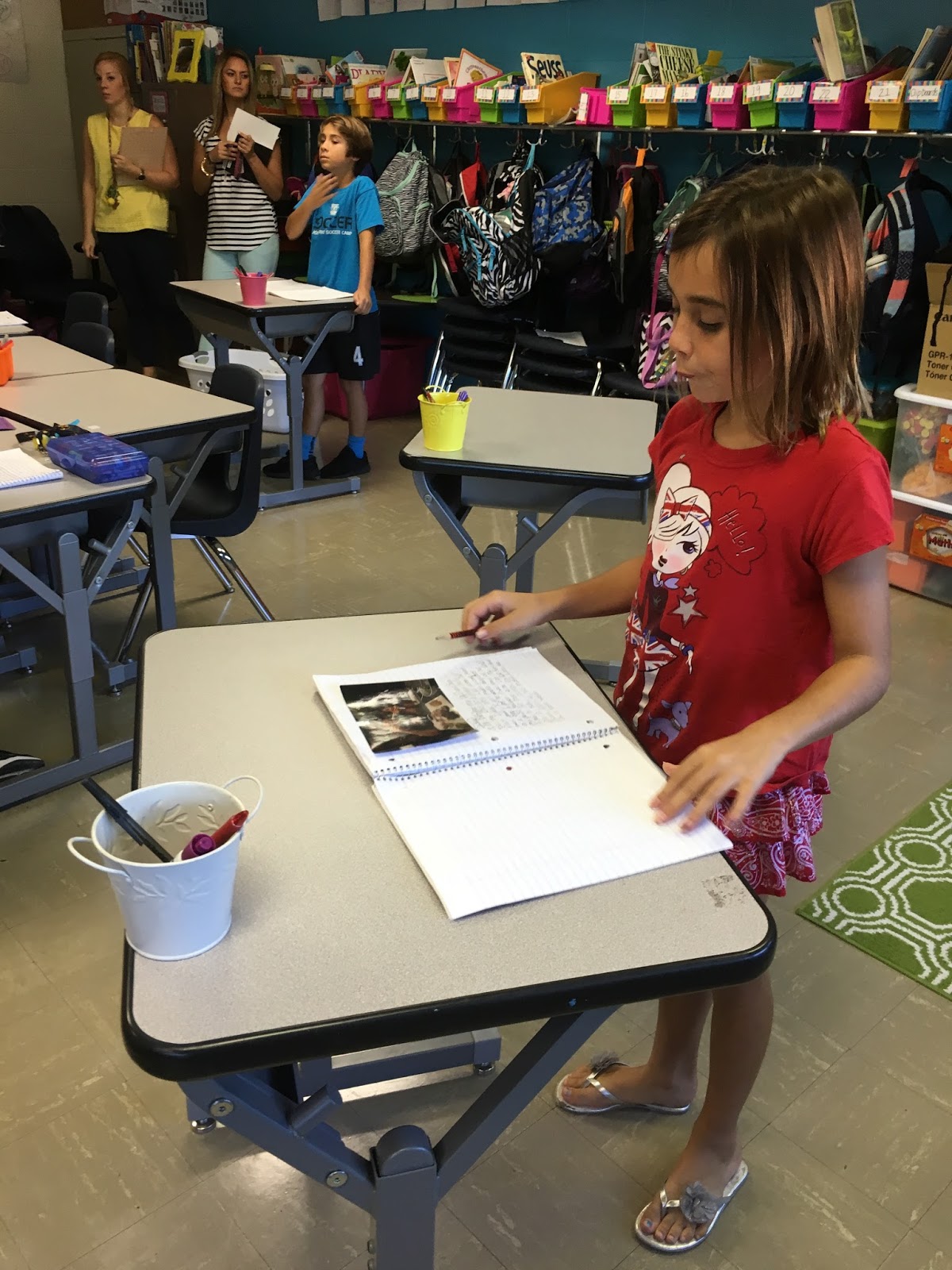
Varied seating options allow student choice for comfort in learning.

Some prefer to sit, others prefer to stand.

Clear guidelines help to manage flexible seating arrangements.
Students pose "wonderings" on the Wonder Wall.  

Flexible seating allows students to think about how they learn best and make seating decisions based on that.

Students set goals and track their progress in their S.T.A.R. binders.

Soft seating too...

Students take ownership for learning with goal setting for the day.

Students write a smart goal with a clear deadline to keep them on track.

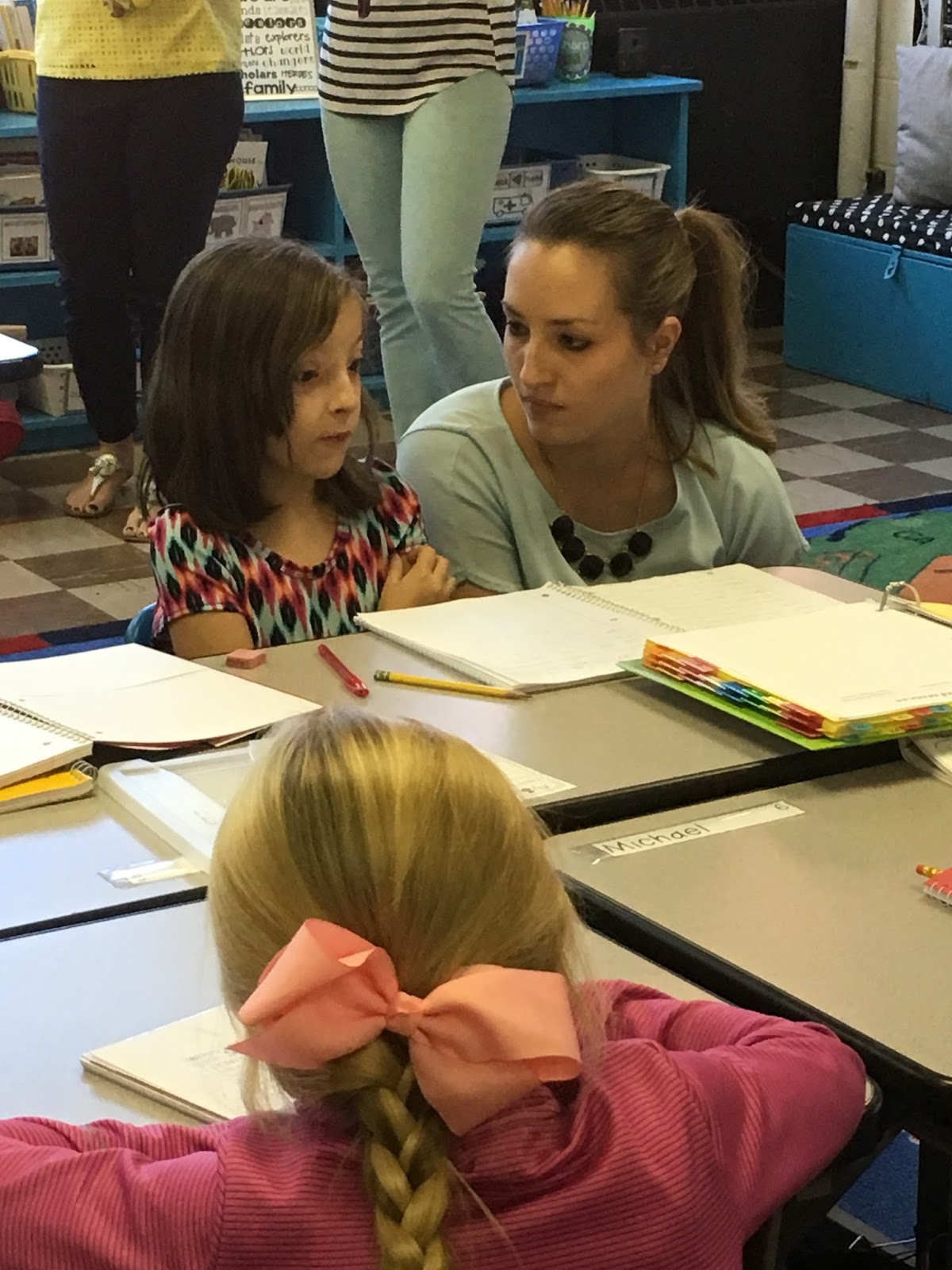
Conferencing during writing supports individual student skill attainment and is further enhanced by teacher documentation for future conferences.

Providing options for budding writers...

Teacher feedback expands into emojis.

 After walkthroughs, learning continues as teachers discuss what they learned and could implement in their classrooms.

How did technology enhance learning?

What best practices did you observe?

What engagement strategies were seen?

What are your take-aways?

Friday, September 16, 2016

A New Model of Leadership and Learning

Flyer Times in middle school are continually evolving, finding their niche in building student relationships, reinforcing learning, and integrating character education.  This year, Flyer Time moved from two days to daily, allowing for student reading choice and reinforcing the importance of reading comprehension.  

At Truman, the elective alternating day class known as Flight Crew moved to a daily Flyer Time where student leaders design the learning for all Flyer Times to use for character education.  

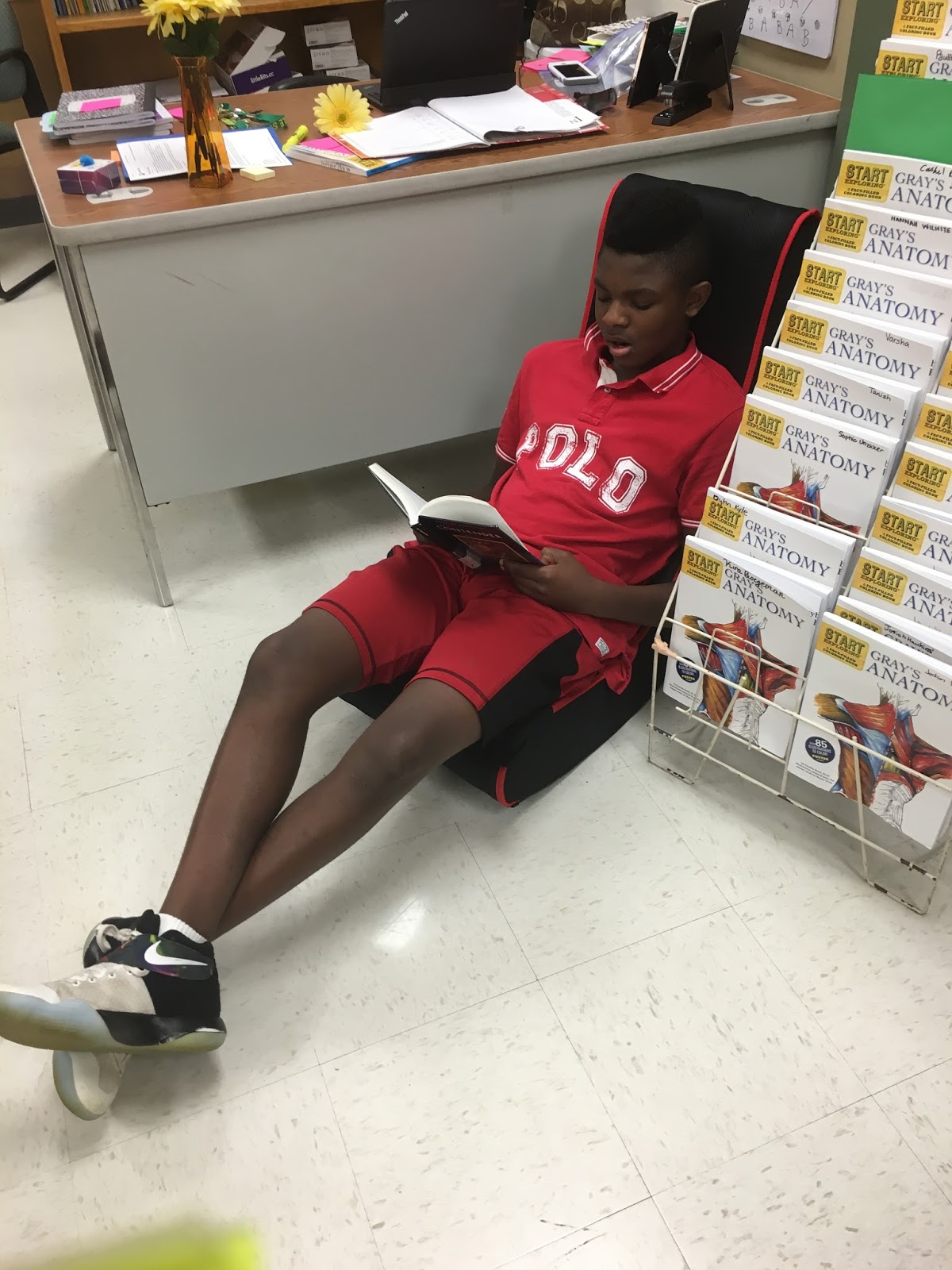
Students should be comfortable when they read.

Silent sustained reading in isolation doesn't demonstrate significant reading gains, but when you add conferencing with students to ensure accountability, conversations to reinforce comprehension, and personal connections, you enhance learning and relationships.
Reading conferences in the hall allow teachers to keep an eye on class engagement and talk one on one without distracting the classroom of readers.

Students read books of their choice and engage with the books in the way that works best for them.  This student is so excited to share her learning with a friend.

Building a reading culture includes modeling reading and highlighting the amount.  It's not included here, but this Flyer Time has completed 11 books already.

Flight Crew works together to develop presentations for character education instruction.

Students will then lead learning within the traditional Flyer Time classes.