Showing posts with label Flexible Seating. Show all posts

Wednesday, October 18, 2017

Engaging the Secondary Student

This weekend, I attended a block party and ending up talking about my favorite subject...teaching!  One poor neighbor (a teacher from a different district) had the misfortune of sharing with me his opinion on structured engagement techniques for high school students, and we had a little "discussion"...yep, I'm that fun at a party!

Here's the truth...I was that student in your high school class.  The one who always looked to be paying attention, nodding and smiling at all the right times, cramming just before the test so that I could show mastery of what you taught, writing well enough to bypass real understanding while appearing knowledgeable, silently hiding behind that student who was bound to earn a 36 on their ACT and willing to participate in class.  Ask how much of that learning I retained...at least one of my AP tests revealed the truth.

Requiring engagement from every student in the classroom is necessary.  It's necessary in order...
  • to build individual accountability
  • to build social skills
  • to ensure every student understands
  • to expand perspectives
The list can go on and on, but check out how we engage our secondary students, and reflect on your student engagement practices.

Students take turns doing the work while their partner praises and coaches using the technique "Rally Coach."

Make students move!  Having students physically move to another location in the room for a demonstration or mini-lesson before they apply their learning resets their brains and prepares them for their next task. 
In small groups, students work to solve problems, creating solutions that apply their learning.  


Use space differently - sometimes the novel is engaging.  Writing on the desk or using vertical space gives student a new perspective.

Peer practice - students take turns practicing their student-led conference and get feedback from their partner.

Group sharing - after students reflect individually, give them a chance to share to expand their thinking.

In teams, students become the nucleus, racing to various parts of the room to learn about mitochondria and DNA structures to complete their puzzles.  (I might have messed up the details of this - sorry Mr. Edwards!  One could suspect that science was one of those subjects where I "hid" as a high schooler.)


Students rotate through stations with specific individual and group tasks.  In this station, students research various types of faults and instruct their team.

While students work in stations, teachers can pull students for small group instruction that allows for formative assessment of understanding.

Tuesday, September 5, 2017

Creative Spaces

We've gotten used to being tight, I'm mean really tight, on space, but now that we have a little more breathing room in our elementary schools, there's opportunity to be creative, to look at space differently.  And, look how creative our spaces are...

But not for these guys...they're happy reading in their tight space.

And for her...why not make yourself cozy under the table?

Interactive bulletin boards:  As students wait for specials, they engage in thinking.

A Wellness Room:  Right now it's all about balance, but it's a space for both students as a fitness option in PE or for classroom teachers to access during the day with students.  I'm sure it's also put to good use after school for teachers focusing on their personal health and wellness.

A Room Ready to Be Designed:  Students are in charge of the design for this studio space.  As they develop and implement their plan, they'll evaluate their choices and make adjustments for this alternative classroom.

Therapy Room Part I:  Painted black ceilings and cozy nooks are just one part of this ITEF grant funded space.

Therapy Room Part II:  Large and small motor movement is an option for students who need a break or sensory supports to help them re-engage for learning.

Wednesday, September 28, 2016

Student-Centered Learning Walks

Last week, 2nd year elementary teachers participated in learning walks as a part of their three year induction process in Lindbergh.  Year two is focused on "Mastering Your Craft", which allows teachers to study best practices and spend time mastering those practices in their classrooms. Conversations were rich as we discussed teacher vs. student-centered instruction, student engagement, depth of knowledge, and much more.

Kindergartners learn multiple methods for counting (ten frame and place value) to build understanding that allows choice in future problem-solving.

Varied seating options allow student choice for comfort in learning.

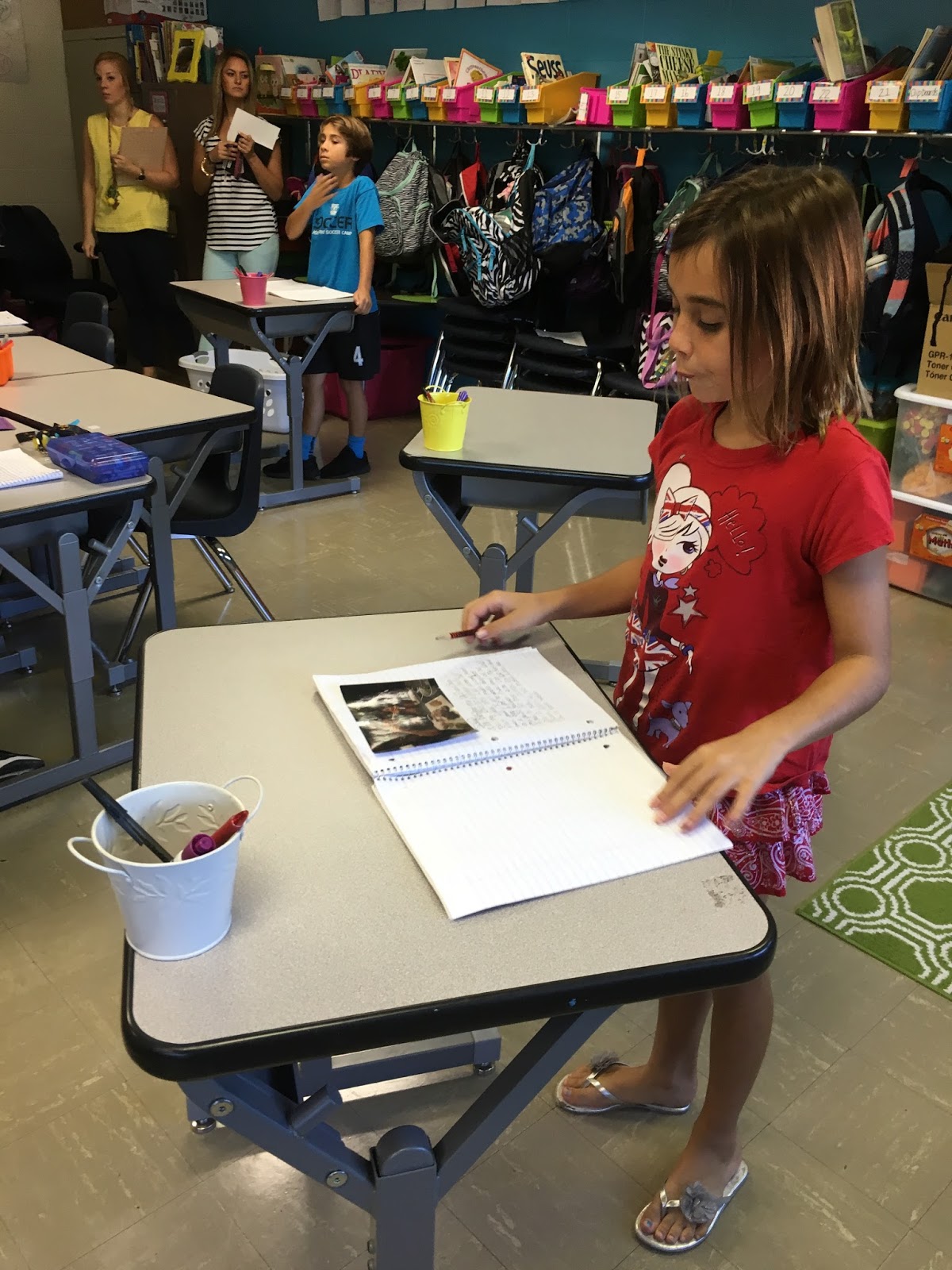
Some prefer to sit, others prefer to stand.

Clear guidelines help to manage flexible seating arrangements.
Students pose "wonderings" on the Wonder Wall.  

Flexible seating allows students to think about how they learn best and make seating decisions based on that.

Students set goals and track their progress in their S.T.A.R. binders.

Soft seating too...

Students take ownership for learning with goal setting for the day.

Students write a smart goal with a clear deadline to keep them on track.

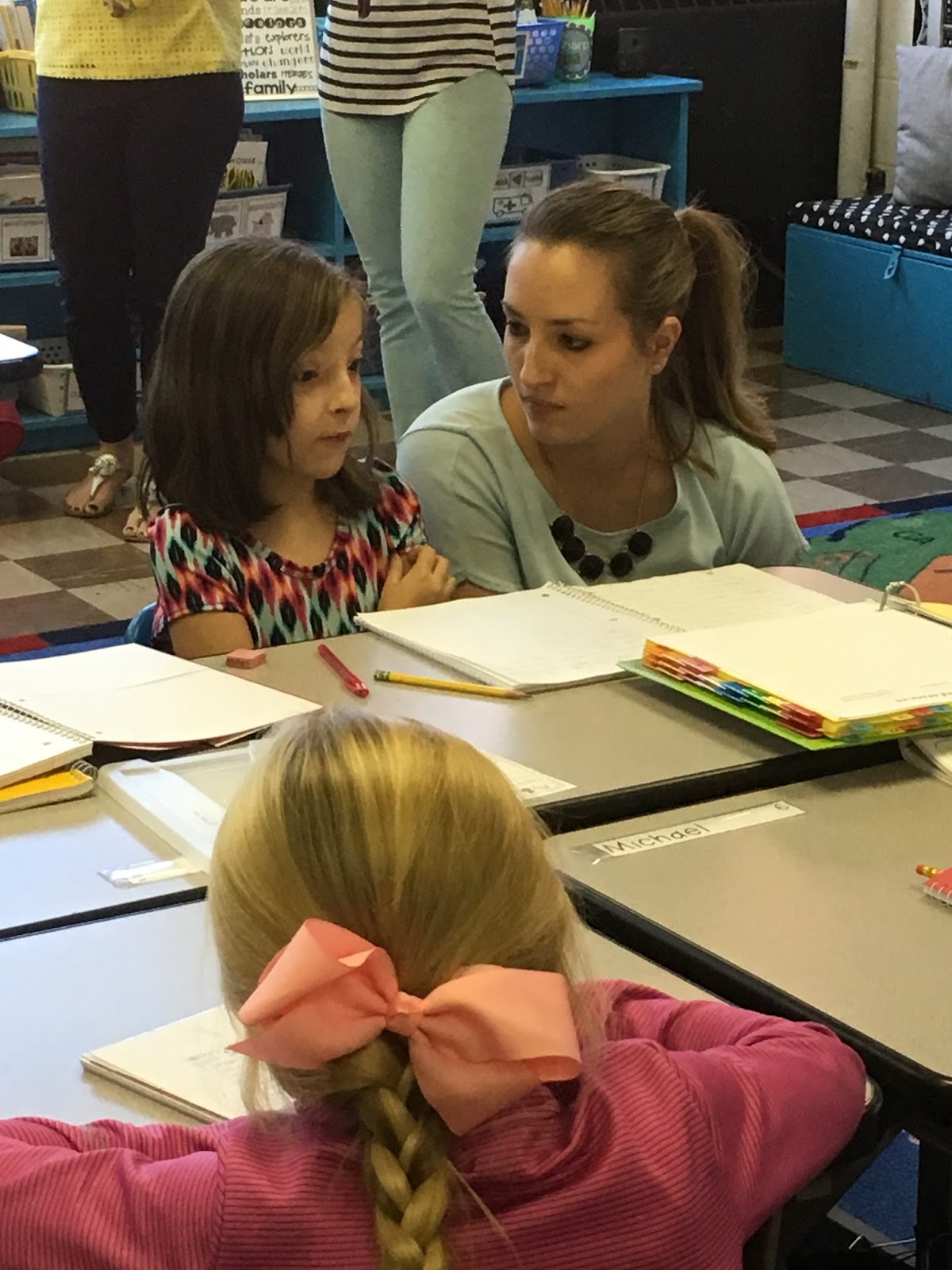
Conferencing during writing supports individual student skill attainment and is further enhanced by teacher documentation for future conferences.

Providing options for budding writers...

Teacher feedback expands into emojis.

 After walkthroughs, learning continues as teachers discuss what they learned and could implement in their classrooms.

How did technology enhance learning?

What best practices did you observe?

What engagement strategies were seen?

What are your take-aways?

Friday, September 16, 2016

A New Model of Leadership and Learning

Flyer Times in middle school are continually evolving, finding their niche in building student relationships, reinforcing learning, and integrating character education.  This year, Flyer Time moved from two days to daily, allowing for student reading choice and reinforcing the importance of reading comprehension.  

At Truman, the elective alternating day class known as Flight Crew moved to a daily Flyer Time where student leaders design the learning for all Flyer Times to use for character education.  

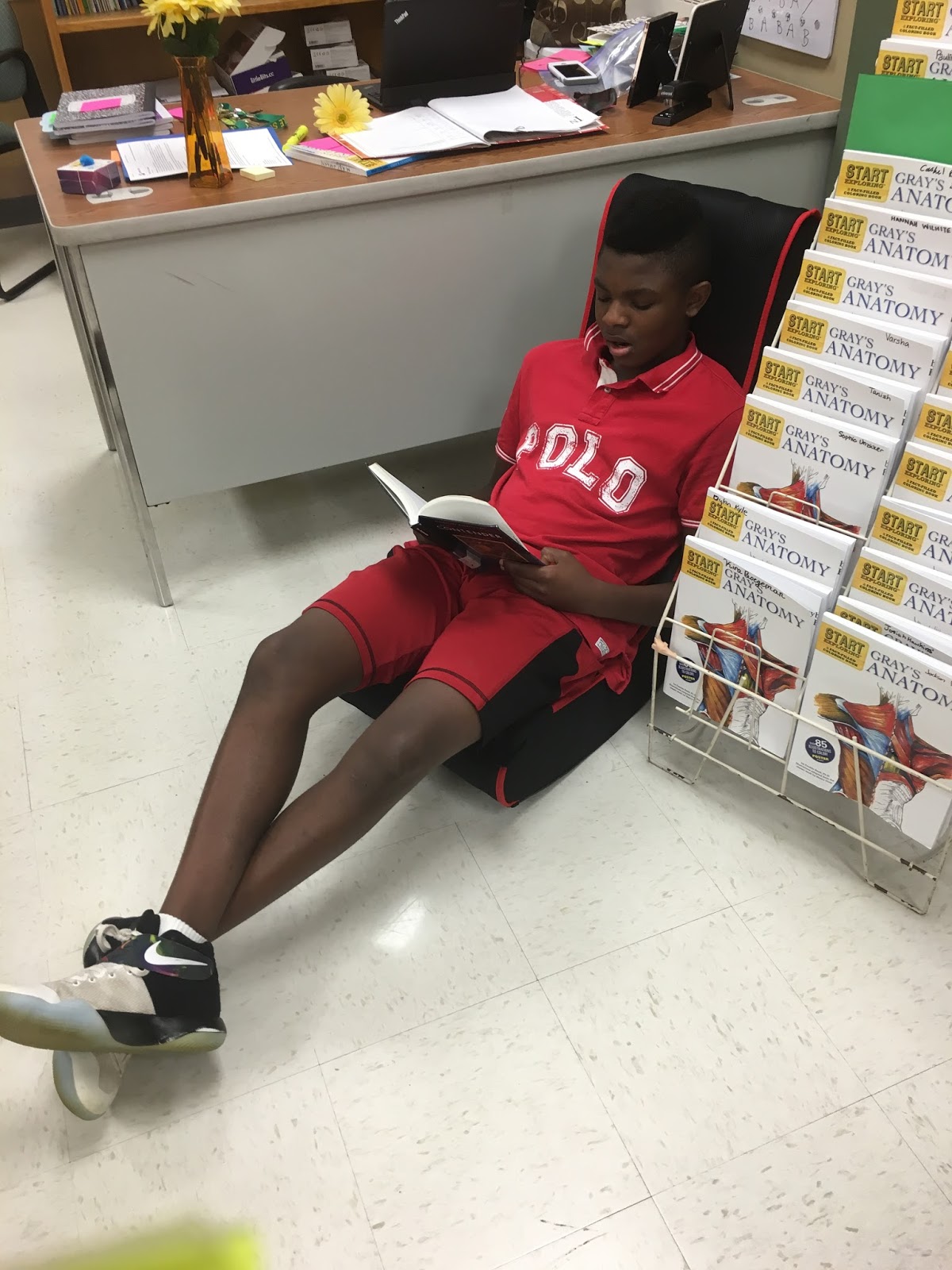
Students should be comfortable when they read.

Silent sustained reading in isolation doesn't demonstrate significant reading gains, but when you add conferencing with students to ensure accountability, conversations to reinforce comprehension, and personal connections, you enhance learning and relationships.
Reading conferences in the hall allow teachers to keep an eye on class engagement and talk one on one without distracting the classroom of readers.

Students read books of their choice and engage with the books in the way that works best for them.  This student is so excited to share her learning with a friend.

Building a reading culture includes modeling reading and highlighting the amount.  It's not included here, but this Flyer Time has completed 11 books already.

Flight Crew works together to develop presentations for character education instruction.

Students will then lead learning within the traditional Flyer Time classes.


Friday, September 9, 2016

Students Own 21st Century Learning


"Think back to last week...how many lectures do you remember your teachers giving you?" Tommy asks the class as they unanimously shrug, adminitting that most are forgotten.  Tommy uses their response to clarify that those traditional learning structures aren't sustainable over time.  But, a PBL (problem/project-based learning) structure gives purpose so that students have a reason to learn.

"In some things in life, there are not right and wrong answers..." Tyler adds to his partner's words.  Tyler identifies that PBL gives students the chance to work through learning beyond right and wrong.

In the English 3 PBL class, students begin the year exploring a topic related to PBL: learning styles, traditional learning structures, 21st century needs and expectations, etc.  Through their research, students propose possible solutions to enhance learning in a traditional high school setting.

Students identify 21st century learning as they begin their PBL class presentation. 

Students work together as directed by their peers who lead their learning.

Students use active learning activities to emphasize the needs of today's diverse learners.

Students incorporate videos, blogs, and other varied sources into their presentations.

Students explain the purpose and benefits of PBL.
Students model solutions to increase use of movement within a traditional high school structure.

Tuesday, August 30, 2016

Evidence of Next Practices

We've all heard of best practices, but in Lindbergh, we are moving onto "Next," those innovative teaching practices that continue to innovate and inspire students.  Check out the next big things in our teachers' classrooms...

Building stamina in Reader's Workshop

Procedural anchor charts provide reminders to students about expectations

Choosing where to sit in Reader's Workshop

A useful anchor chart that readers can keep on using all year

Clear lesson objectives in kid-friendly language 

Reading conferences at the beginning of the year help teachers learn more about their readers and plan for instruction throughout the year


Flexible seating allows for learners to make choices about where they work & learn best

A subject-specific anchor chart with clear definitions and modeling

Goal-setting is an important piece of learning

With something new comes...expectations!

Using math to tell all about me

Partnerships telling "stories" about artifacts they brought from home

Writing about Reading Anchor Chart

Supporting a growth mindset

Clear expectations and purpose for learning

Flexible seating:  tall top tables and collaborative learning

Flexible seating:  alternative space to learn

Charting increases in student reading stamina

Math Foldables and Notebooking